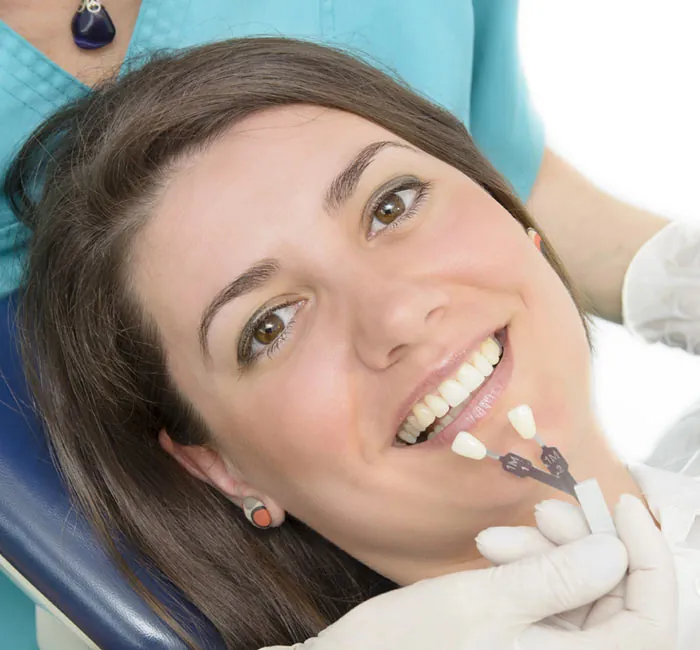
What Are Dental Veneers
Dental veneers are thin, custom-made shells designed to cover the front surface of your teeth. They are bonded to the tooth to change its colour, shape, size, or length, providing an improved appearance.
Veneers may be used to address a range of cosmetic concerns, including teeth that are chipped, worn down, discoloured, slightly misaligned, or uneven in shape. At our Croydon practice, our dentists will assess your teeth and discuss whether veneers are a suitable option for your situation.
Porcelain vs Composite Veneers
Porcelain Veneers
Porcelain veneers are crafted in a dental laboratory from high-quality ceramic material. They are custom-designed to match the shade and contour of your surrounding teeth.
- Generally more durable and longer-lasting than composite alternatives
- Stain-resistant surface that maintains its appearance over time
- Typically requires a small amount of enamel to be removed during preparation
- Usually completed over two or more appointments
Composite Veneers
Composite veneers are made from tooth-coloured resin material and are applied directly to the tooth surface. They offer a more conservative approach with less tooth preparation required.
- Less preparation of the natural tooth structure compared to porcelain
- Can often be completed in a single appointment
- Generally a lower-cost option
- Can be repaired or modified if needed
- May require more frequent maintenance over time
The Veneer Process
The veneer process typically involves several stages, beginning with a thorough consultation at our Croydon clinic.
- Consultation and assessment — your dentist will examine your teeth, discuss your goals, and determine whether veneers are appropriate for you
- Preparation — a small amount of enamel may be removed from the tooth surface to allow the veneer to sit naturally (the amount varies depending on the type of veneer)
- Impressions and design — for porcelain veneers, impressions are taken and sent to a laboratory where the veneers are custom-made
- Fitting and bonding — the veneer is checked for fit, colour, and shape before being permanently bonded to your tooth
Your dentist will provide specific care instructions to help maintain your veneers. Regular check-ups and good oral hygiene are important for the longevity of any dental restoration.