What Is a Deep Clean
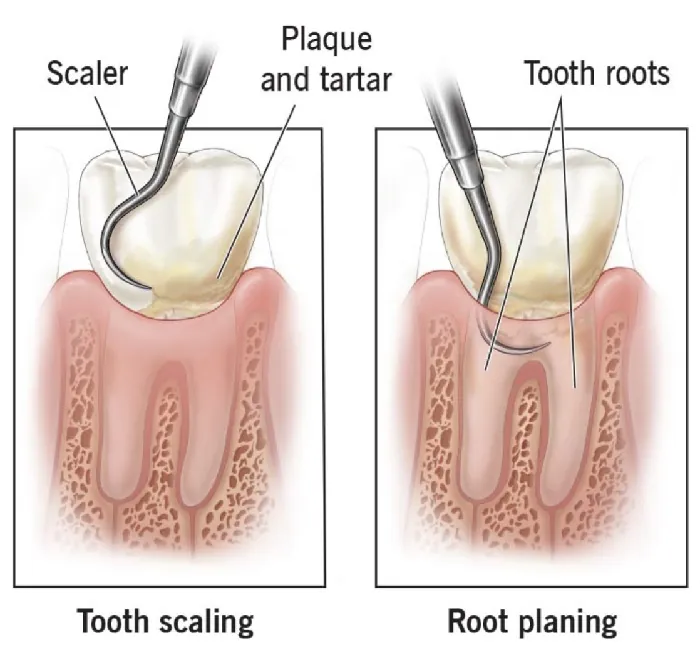
A deep clean, also known as scaling and root planing, is a dental procedure designed to treat gum disease (periodontitis). Unlike a standard clean that focuses on the surfaces of your teeth above the gumline, a deep clean targets the areas below the gumline where tartar and bacteria accumulate within periodontal pockets.
When gum disease progresses, the gums pull away from the teeth and form pockets that trap plaque, calculus, and bacteria. If left untreated, this can lead to further bone loss and, eventually, tooth loss. A deep clean at our Croydon dental practice removes these deposits and helps create the conditions for your gums to heal and reattach to the tooth surfaces.
Your dentist will recommend a deep clean based on a thorough assessment of your gum health, including measurements of the depth of your gum pockets.
The Deep Cleaning Procedure
The deep cleaning process is carried out carefully to ensure your comfort throughout. Depending on the extent of gum disease, the procedure may be completed in one visit or spread across multiple appointments.
- Thorough assessment — your dentist will evaluate your gum health, including measuring the depth of periodontal pockets around each tooth
- Local anaesthetic — the treatment area is numbed to keep you comfortable during the procedure
- Scaling — ultrasonic and hand instruments are used to remove calculus and bacterial deposits from above and below the gumline
- Root planing — the root surfaces of the teeth are smoothed to help the gums reattach and to discourage further buildup of tartar
- Multiple visits — if gum disease is widespread, your dentist may treat different areas of the mouth across separate appointments to manage comfort and healing
After Your Deep Clean
Following a deep clean, it is normal to experience some sensitivity or tenderness in the treated areas for a few days. Your gums may also feel slightly swollen as the healing process begins. These symptoms typically resolve within a week.
To support recovery and long-term gum health, your dentist will advise on appropriate home care practices:
- Gentle brushing — use a soft-bristled toothbrush and brush twice daily, being careful around tender areas
- Flossing and interdental cleaning — daily flossing and the use of interdental brushes help keep the spaces between teeth clean
- Follow-up visits — your dentist will schedule appointments to monitor gum healing and reassess pocket depths
- Ongoing maintenance — regular maintenance visits at our Croydon practice are important for managing gum health long-term and preventing recurrence of gum disease
With consistent home care and regular professional maintenance, many patients see significant improvement in their gum health following a deep clean.